
Dubrovnik feels different when you walk it. This 2-hour private Spanish tour threads the key sights from Pile Gate to Stradun and down into Santa Maria, finishing with viewpoints over white rocks and the blue sea toward Lokrum Island.
I love the small-group feel, and I love how the guiding style matches you in real time. Multiple guests singled out guides such as Patricia Beatriz and Ankica for clear explanations, lots of Q and A, and going a bit beyond the planned time when it mattered.
One possible drawback: it is a lot of ground to cover in a short window. If you like to linger and take your time inside every stop, you may want to plan extra time for Dubrovnik afterward.
Key highlights that make this tour worth your time
- Pile Gate start with an easy orientation: you begin right at the old town entrance area, so you quickly learn the layout instead of wandering blindly.
- Stradun promenade done with context: you walk the main approach street and learn how the city’s landmarks connect.
- City walls and Renaissance architecture focus: you get a feel for why Dubrovnik’s walls are such a statement piece.
- Santa Maria and Buza for the more local vibe: you move beyond the big postcard zone into a quarter favored by residents.
- St Stjepan viewpoint toward Lokrum: that moment frames the coast and island in a way that pictures often miss.
- Ulica od Puca adds texture: instead of only monuments, you also pass through everyday old-street details like jewelry shops and tiny churches.
Dubrovnik on foot, a few more routes off the Stradun
- Dubrovnik: Old Town Walking Tour★ 4.8 · 5,174 reviews
- Dubrovnik Discovery Old Town Walking Tour★ 5.0 · 4,458 reviews
- Dubrovnik: Game of Thrones Walking Tour★ 5.0 · 1,732 reviews
- Dubrovnik Old Town History Walking Tour★ 5.0 · 1,684 reviews
Entering Dubrovnik at Pile Gate, then getting your bearings fast
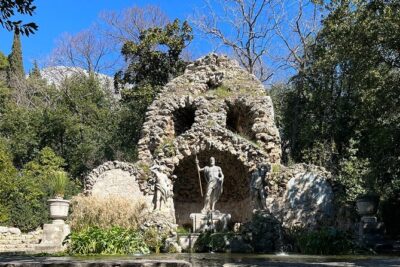
The tour starts near the Armerling Water Fountain (Brsalje), just a short walk from the entrance to the old town near Pile Gate. That matters because Dubrovnik’s Old Town can feel like a maze when you first arrive. Beginning at the right edge helps you understand where everything sits before you sink into the sights.
From there, you move into the city’s main axis and start picking up patterns. You will see how the streets feed into the major public buildings, how landmarks line up along Stradun, and how the city walls shape the whole experience. Even if you have visited other walled towns, Dubrovnik’s layout hits differently because everything feels both tight and monumental.
Stradun: the main promenade, plus all the big icons
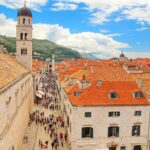
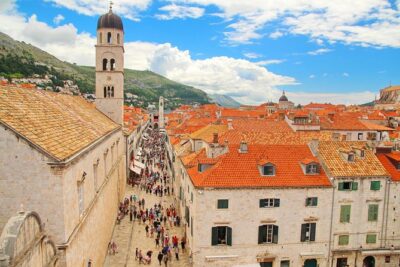
Stradun is the spine of Dubrovnik, and walking it with a guide makes it more than a postcard street. As you move along, you get pointed to the most important historic stops, including the Franciscan Monastery at one end and the area around the Church of St. Blaise and the palace buildings at the other.
Here is why this part is valuable. Stradun is long enough that it can blur together if you just follow signs. With context, each turning point becomes a mini-story. You understand what you are looking at and you start to notice details like architectural transitions, civic power, and the way religious sites anchor public life.
This route also gives you a practical pacing rhythm. You do not just shuffle from one photo spot to another. You walk, stop briefly, learn something specific, then continue. For many people, that is the difference between feeling overwhelmed and actually enjoying the old town.
City walls and Renaissance architecture: seeing Dubrovnik’s “why”
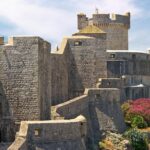
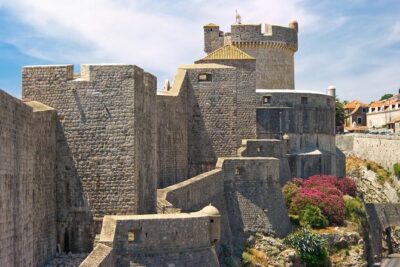
Dubrovnik is surrounded by more than a mile of walls, and the tour frames the walls as more than scenery. The walls are considered a masterpiece of Renaissance architecture, and the guide helps you see them as part of how the city defended itself and projected authority.
What you get out of this is a mental model. Once you understand that the walls are not just for looks, the rest of the architecture starts making more sense. Towers, corners, and the city’s elevated vantage points feel purposeful instead of random.
Also, walking in the old town, you tend to focus on buildings at street level. A city-wall conversation shifts your attention upward, so you start looking for angles and structure. It is a subtle change, but it transforms how you experience the place.
Franciscans, Onofrio’s Fountains, Sponza, and the core civic landmarks
The heart of the old town route includes a sweep of iconic stops. You will pass through the kinds of landmarks that define Dubrovnik’s historic identity, including Onofrio’s Fountains, Sponza Palace, Orlando’s Column, and the bell tower area.
You are also guided to key religious and civic sites such as the Church of St. Blaise, the Rector’s Palace, and the Cathedral. Even if you are not a hardcore church person, this cluster works because it shows how different institutions share the same public space. Dubrovnik is tightly planned, and these sites demonstrate the balance between governance, faith, and daily life.
One small warning to keep in mind: some of these landmarks invite closer viewing and photos, which can slow you down. Since the tour lasts about 2 hours, the guide’s job becomes prioritizing. In the best tours, that means you get the essential story and enough time to see, not enough time to burn out.
Dubrovnik on foot, a few more ways
- Dubrovnik: City Walls Early Morning or Sunset Walking Tour
★ 4.8 · 1,523 reviews - Dubrovnik: Ancient City Walls & Wars Walking Tour
★ 5.0 · 1,270 reviews - Dubrovnik: Game of Thrones Walking Tour
★ 4.9 · 981 reviews - ‘Game of Thrones’ Walking Tour in Dubrovnik
★ 4.5 · 945 reviews - Dubrovnik: Old Town Walking Tour
★ 4.9 · 792 reviews
Santa Maria and Buza: the oldest district, with a more local feel
After the main historic sweep, you head to Santa Maria, described as the oldest district in Dubrovnik. This shift is smart. It changes the mood from grand monuments to lived-in neighborhoods.
Inside Santa Maria, the guide takes you toward Buza, a quarter known for being frequented mostly by locals. That matters because Dubrovnik’s Old Town can feel crowded and theatrical when you stay in the headline areas. Buza adds a calmer, more human layer, so the city feels like a place where people actually spend time, not only a museum you pass through.
This is also where the tour earns its “private” advantage. In a small setting, you can ask follow-up questions without feeling like you are slowing down the whole group. That can be especially helpful here, where the details are less obvious at first glance.
The St Stjepan door and the Lokrum viewpoint that makes you look outward
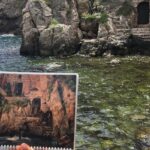
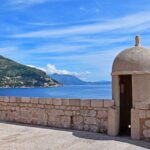
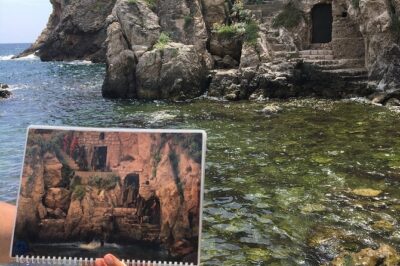
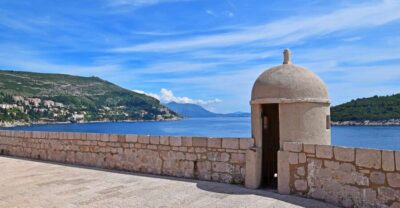
One of the tour’s most specific moments happens in Buza. The guide points you to the door of St Stjepan, where a view opens out over white rocks and the blue sea to Lokrum Island.
It is the kind of scene that sounds simple, but it is hard to replicate on your own without knowing where to stand. Dubrovnik has so many viewpoints that it is easy to pick a spot that is scenic but not quite the best composition. A guided stop funnels you toward one that frames the coast and island in a memorable way.
If you care about photos, this is where you should plan your attention. Look first, take a few pictures second. The value of that viewpoint is not just the postcard look. It is also the orientation it gives you. You start to understand what Dubrovnik faces across the water.
Ulica od Puca: jewelry shops, an old barber shop, and tiny churches
On your way back, the route includes Ulica od Puca. This street is known for traditional jewelry shops, an old barber shop, and small churches. This is a good reminder that the old town is not only monuments. It is commerce, craft, and neighborhood routines.
Even if shopping is not your thing, these kinds of stops help you connect the big historic buildings to everyday life. You see that Dubrovnik’s old streets still function as streets. That kind of texture makes the city feel more real when you leave the tour.
Spanish-only guiding: how it changes the experience
This tour is guided in Spanish, and that shapes how much you can absorb. If Spanish is your comfort zone, you get to ask direct questions and follow explanations without translating in your head. That makes the history feel more usable, not just scenic.
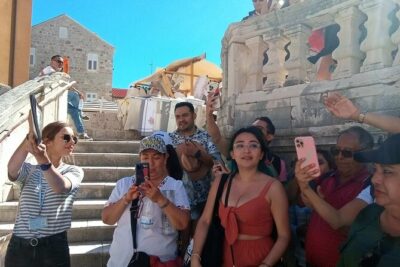
The reviews consistently praise the guide’s communication style. Guests specifically mentioned Patricia Beatriz for clear explanations, kindness, empathy, and answering lots of questions. One review highlighted that she even took extra time to ensure the tour felt complete, and another noted she took time for photos and offered personal recommendations. Another mention was Ankica, described as excellent.
I also like the way this seems to work as a coaching tool. A good guide does not just recite dates. They help you connect what you are seeing to why it matters, then they give you practical directions for where to go next.
Private group up to 3: pacing, attention, and why it can be good value
The price is listed as $117 per group for up to 3 people, for a 2-hour walk. On its face, that might sound steep if you compare it to group tours. The real question is whether you want speed or focus.
For two or three people, the math gets friendlier. You are paying once for a guided route that includes major landmarks, plus off-the-main-street moments in Santa Maria and Buza. If you are traveling as a couple or a small family, private guiding can feel like the best way to get real context without splitting up.
The other big value is attention. In a private small group, the guide can slow down when you ask something interesting, or speed up when you are ready to move. That matters in Dubrovnik because crowds and narrow streets can make timing tricky. A guide helps you keep the pace comfortable.
What you will likely feel by the end of 2 hours
By the time you come back toward Stradun, you should feel oriented in a way that most self-guided walks do not deliver. You will have seen the main promenade, learned what makes the walls special, touched the central civic and religious cluster, then shifted into Santa Maria and Buza for a more local feel. Finally, you get a specific coastal viewpoint toward Lokrum and a last glance at everyday old-street character on Ulica od Puca.
This combination is what makes the tour work for first-timers and for people who think they already know Dubrovnik. Even if you have seen Stradun from videos, the guide gives you the missing layer: how the sights connect as one city system.
Who should book this Dubrovnik walk?
This tour fits best if you want:
- A private Spanish guide who explains as you walk
- A structured route that still includes neighborhood texture in Santa Maria and Buza
- The core UNESCO old town sights, plus a focused viewpoint toward Lokrum Island
- A pace that adapts to your questions, not a rigid script
It might be less ideal if you only want to wander and discover purely on your own, or if you need long breaks at each stop.
Should you book it
If your top priority is to understand Dubrovnik instead of only collecting images, I think you should book this. The route hits the big landmarks you should see, then adds exactly the kind of small district detours that help the city feel lived-in. The reviews point to a clear pattern too: guides who explain well, answer questions, and take extra care to make the walk feel complete.
If you are on the fence, treat this like a strong foundation. Use it on one of your first days in Dubrovnik, then come back later for the parts you want to revisit at your own pace.
FAQ
Where does the tour start?
The meeting point is at the Armerling Water Fountain (Brsalje), near the entrance to the old town of Dubrovnik and close to Pile Gate.
How long is the Dubrovnik walking tour?
The tour duration is 2 hours.
Is the tour private?
Yes. It is a private group, with pricing listed per group up to 3 people.
What language is the guide?
The live tour guide speaks Spanish.
What sights are included in the walking route?
The tour includes key old town landmarks such as Stradun, city walls, the Franciscan Monastery, Onofrio’s Fountains, Sponza Palace, Orlando’s Column, the Bell Tower, the Church of St. Blaise, the Rector’s Palace, the Cathedral, Santa Maria, Buza (including the St Stjepan door view), and Ulica od Puca.
What is included in the price?
A private walking tour with a guide is included, along with tourist brochures and maps.
What is not included?
Transfers, food and beverages, and souvenirs are not included.
Can I cancel for a full refund?
Yes. Free cancellation is available up to 24 hours in advance for a full refund.
Is it possible to reserve without paying right away?
Yes. The offer includes reserve now & pay later, meaning you can book your spot and pay nothing today.
More Tours in Dubrovnik

Keep Walking the Old Town

More Tour Reviews in Dubrovnik

Fresh on the Dubrovnik shortlist


Old Town Walking Tours, compared.
 ★ 4.8Old Town Walking TourFrom $235,174 reviews
 ★ 5.0Dubrovnik Discovery Old Town Walking TourFrom $244,458 reviews
 ★ 5.0Game of Thrones Walking TourFrom $301,732 reviews
 ★ 5.0Dubrovnik Old Town History Walking TourFrom $241,684 reviews
 ★ 4.8City Walls Early Morning or Sunset Walking TourFrom $291,523 reviews
 ★ 5.0Ancient City Walls & Wars Walking TourFrom $301,270 reviews
★ 4.9Game of Thrones Walking TourFrom $29981 reviews
★ 5.0Ancient City Walls & Wars Walking TourFrom $301,270 reviews
★ 4.9Game of Thrones Walking TourFrom $29981 reviews
 ★ 4.5‘Game of Thrones’ Walking Tour in DubrovnikFrom $85945 reviews
Browse the lists this tour appears in