
Tour review · CITY WALLS & OLD TOWN
Dubrovnik Old City Private Tour
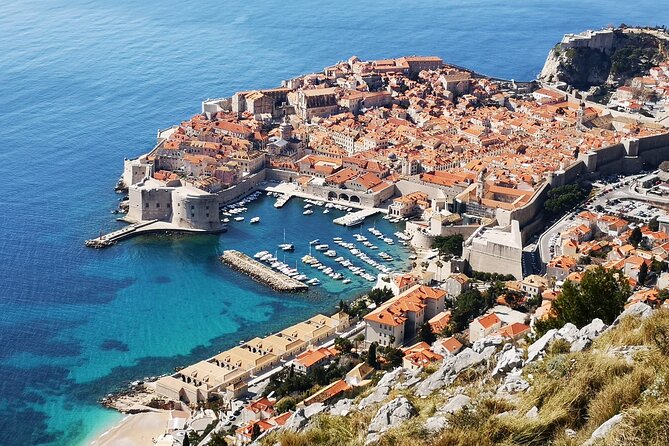
Dubrovnik looks postcard-perfect, then the guide turns it into a story. This private 2.5-hour walk focuses on key landmarks like Pile Gate, Stradun, Rector’s Palace, and the harbor fortifications, plus how the city changed from ancient times to the 1990s conflict.
I like two things most. First, the route gives you the big hits without feeling like a rushed checklist. You’ll also get time for museums when they’re running, usually with entrance fees included for two stops. Second, you’re walking with one guide for your group, so it’s easier to ask questions and get context on what you’re seeing, including references that pop up in popular culture.
One consideration: the Old City is made of steps, hills, and tight turns. Even with good pacing, you should plan on lots of walking and expect some stops to shift if crowds, weather, or seasonal hours make timing tricky.
Key highlights worth prioritizing
- Private guide for your group, so you can hear the story and ask questions without crowd noise
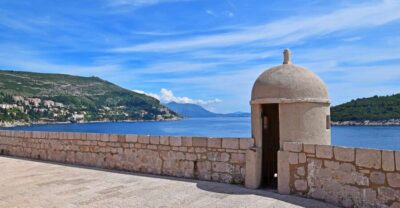
- Pile Gate and the city walls, including a strong viewpoint tied to Dubrovnik’s defenses
- Franciscan Church and monastery museum, often with an included ticket plus the old pharmacy display
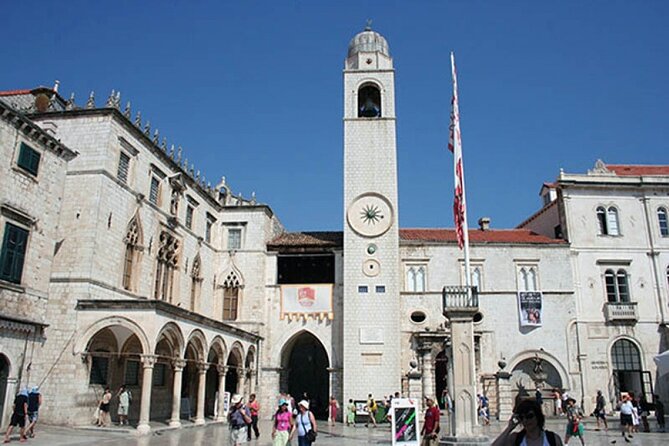
- Stradun plus Onofrio’s Fountain, the classic spine of the walled city you’ll understand better after the talk
- Harbor fortifications from St. John to Revelin, giving you the defense logic behind the stone
- Luza Square wrap-up, so your visit ends in the center of the action
More time up on the ramparts and inside the Old Town
- Dubrovnik: Old Town Walking Tour★ 4.8 · 5,174 reviews
- Dubrovnik Discovery Old Town Walking Tour★ 5.0 · 4,458 reviews
- Dubrovnik Old Town History Walking Tour★ 5.0 · 1,684 reviews
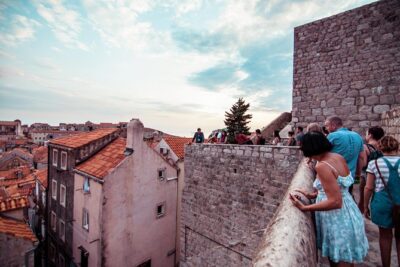
- Dubrovnik: City Walls Early Morning or Sunset Walking Tour★ 4.8 · 1,523 reviews
A private Old City tour that actually helps you see the layout
The best value of a private walking tour here is not the luxury feeling. It’s clarity. Dubrovnik’s Old City is walled, layered, and slightly confusing when you’re on your own. With a guide, you quickly learn what each street section is for, where the power lived, and why the city looks the way it does.
You also get a more human pacing. In past tours, guides like Vlaho, Antun, Paolo, Tea, and Paula are specifically called out for being easy to spend time with, answering questions, and keeping groups comfortable. That matters in a place where the route naturally includes stairs and changes in elevation.
If you like history but hate museum lectures that last too long, this format is a good compromise. You’re outside most of the time, stepping between major sites and learning why they matter. The timeline runs from early Dubrovnik days through the Republic era and up to the 1990s conflict, so you leave with a sense of continuity rather than a handful of disconnected facts.
Start at Nautika, get oriented fast, and ease into the walk
The tour meets at Nautika (Brsalje ul. 3). It’s a straightforward start point, and it helps you get your bearings before you enter the busiest core. You’ll also get a short welcome and intro, then you head toward viewpoints that show how the city sits against the sea.
One early stop is Kolorina Bay area around U Pilama and the nearby St. Lawrence Fortress viewpoint. This is a nice way to get your mental map in place. You see the defensive thinking from the outside before you commit to the inside lanes.
A small but smart detail here: the early pieces are timing-friendly. You’re not immediately swallowed by the busiest crowd sections. Instead, you get a warm-up walk that sets up what you’ll see at Pile Gate and beyond.
Pile Gate and the wall logic you’ll never notice on your own
When you reach Pile Gate (West Gate Pile), the city walls stop being just pretty stone. Your guide explains how these gates and fortifications functioned as part of a bigger system, not as isolated landmarks.
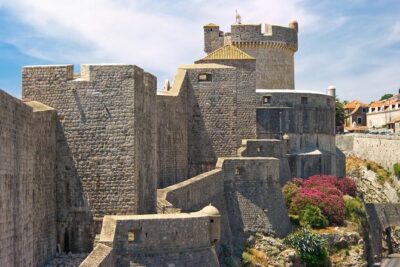
You’ll also look toward the Tower of Minčeta. That viewpoint connection matters because the walls and towers were built to watch approaches and protect the inner city. In other words, you start seeing Dubrovnik as a defensive machine that also had to work as a living town.
This is one of those moments where a guide pays off immediately. Without context, it’s easy to photograph and move on. With context, you notice lines of sight, the position of entrances, and how people would have moved in and out during tense times.
Franciscan Church and the monastery museum, including the old pharmacy
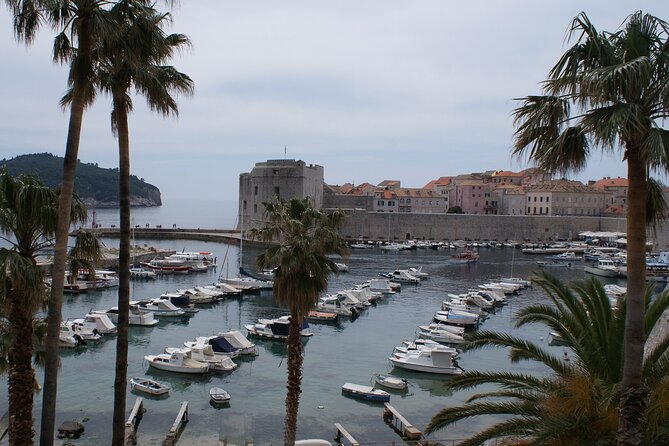
The stop at the Franciscan Church and Monastery is where the tour adds atmosphere and material culture. You’ll not only hear history, you’ll also visit the museum and the old pharmacy area.
This is a big reason I like this tour for people who want more than street-level sightseeing. The pharmacy display gives you a human angle on how the city lived, treated illness, and valued knowledge. It’s also a good break from walking, especially in heat.
Ticket detail to know: the tour includes two museum entrance fees in general, but the exact museums can be substituted depending on time, date, or season. If the Franciscan or Dominican monastery museum (and the Cathedral Treasury) are not the ones used that day, the tour swaps in another museum stop to match the available schedule. If any museum is closed for any reason, the funds are refunded.
In practice, this flexibility is a plus. It keeps the tour on track instead of turning into a walk-and-guess plan.
Other days with a guide kept just to yourself
- Private Tour: Montenegro Day Trip from Dubrovnik
★ 4.5 · 495 reviews - Tour The Game of Thrones – Private Walking Tour
★ 5.0 · 464 reviews - Montenegro Private Full Day Tour from Dubrovnik
★ 5.0 · 376 reviews - PRIVATE TOUR: Highlights & Hidden Gems of Dubrovnik With Locals
★ 5.0 · 249 reviews - Dubrovnik: Old Town & City Walls Private Walking Tour
★ 5.0 · 206 reviews
Stradun and Onofrio’s Fountain, once you know what you’re looking at
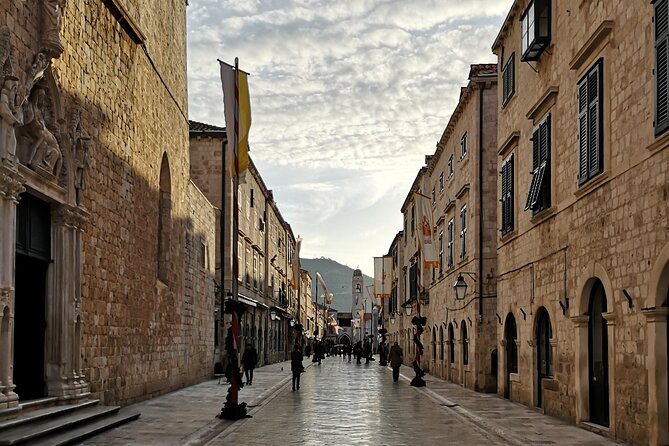
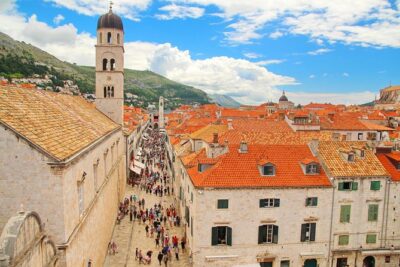
Stradun is the main city street, the classic spine of the walled town. It can feel like a simple promenade when you’re wandering alone. After your guide sets the background, you start noticing how the street works as a stage for civic life.
You’ll also see Onofrio’s Fountain and the Church of the Holy Saviour along the way. The best part is that the guide can connect these landmarks to Dubrovnik’s Republic-era identity, wealth, and how the city organized itself around public space.
This section is also where you’ll appreciate a private group. Stradun gets busy. With your own guide, it’s easier to pause where you want, ask questions, and keep moving without feeling like you’re being herded.
St. Ignatius of Loyola and the side-street clues behind the main sights
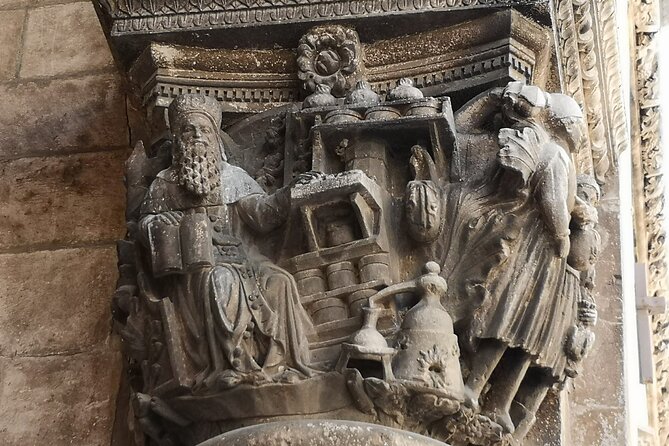
Past Stradun, you’ll move into quieter lanes toward hidden streets and major Jesuit-linked landmarks like the Church of St. Ignatius of Loyola. You’ll also see features such as the Great Granary, the stairway area associated with the Jesuit church, and end up near Square of Ivan Gundulić.
This part is valuable because it fills in the “how people actually lived here” story. The main street shows the public face. The side streets show the structure behind it, including the presence of religious and civic institutions close to the everyday flow of life.
One practical tip: wear shoes you trust on stone stairs. Even when the guide controls the pace, you’ll still have moments where stepping carefully matters.
If your group includes teens or kids, this section often lands well because the narrow streets and dramatic church steps create natural “show me” moments. One review story highlighted how a family of five (with teens) found the pacing and interaction just right.
Cathedral area and Rector’s Palace: power, religion, and the Republic mindset
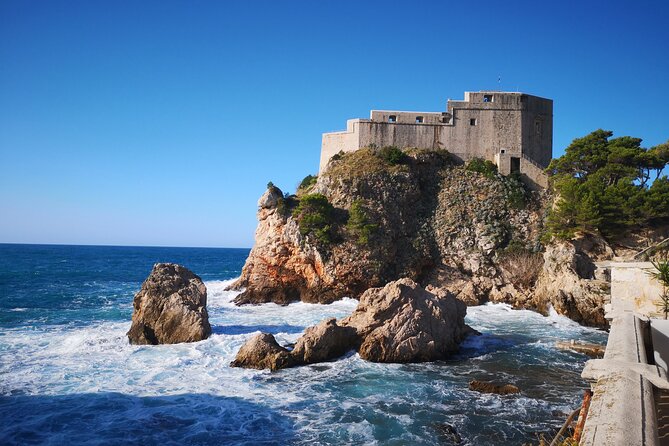
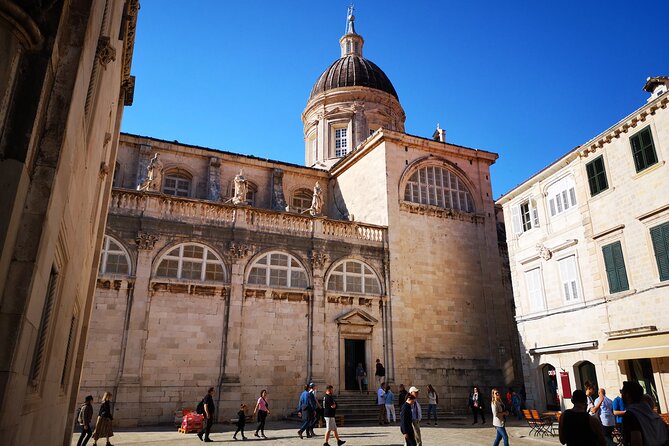
The tour takes you to the Cathedral of the Assumption of the Virgin Mary area and, where applicable, the Treasury of the Republic. Like the monastery stop, this can be one of the included museum entrances depending on the substitution plan for the day.
Then you move to Rector’s Palace. This is where Dubrovnik’s Republic era becomes tangible. You’re walking past the seat of government, and your guide’s job is to help you understand what “Republic” meant in real life. It wasn’t an abstract label. It shaped who held authority, how decisions were made, and how the city defended its independence.
If you care about how politics and city design relate, this is a strong pairing. Palace first, then cathedral ties power and spiritual life together in one compact area. It’s one of those old-town stretches where the buildings feel like they’re speaking to each other.
City Harbor fortifications: the defense system across sea, gates, and quarantine history
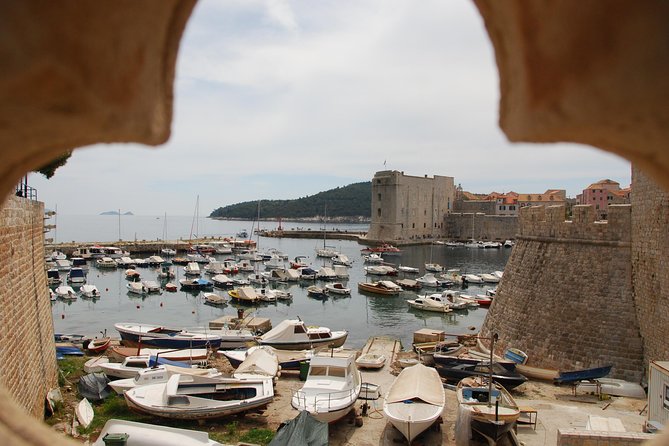
The tour shifts toward the harbor area, where Dubrovnik’s defense story expands beyond walls. You’ll cover stops tied to Fortress of St. John, the Lazareti Quarantine, fortifications of St. Luke, Revelin Fortress, and the East Gate Ploče region. The Dominican Monastery is also part of this segment.
This is one of the most meaningful parts of the whole experience because it shows how Dubrovnik protected trade, controlled entry, and responded to outbreaks. The Lazareti Quarantine stop in particular adds a human layer to the word defense. It wasn’t only about weapons. It was also about stopping disease from moving through the city.
In reviews, guides are praised for making history feel personal, especially around the siege and the city’s modern trauma. Since the tour’s history track reaches the 1990s conflict, you’ll likely connect these fortification choices to the city’s long habit of preparing for threats.
Also, this harbor segment is where you often get better visual payoff. You can see how close the city sits to the water and why that mattered for security and economy.
Luza Square wrap-up: the public heart of the Old City
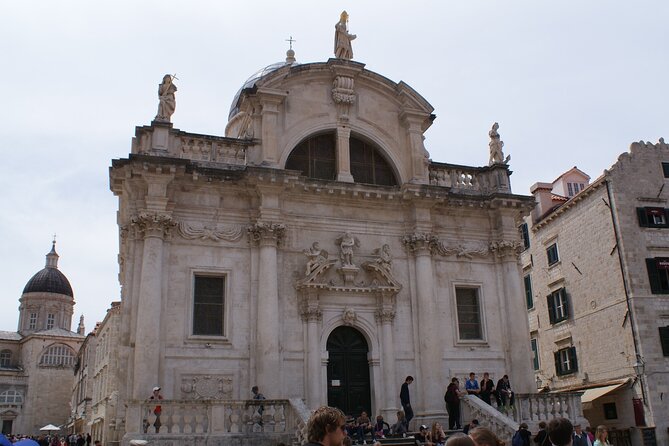
The tour ends at Luza Square (Luža ul.), near the Church of St. Blaise. You’ll stop through the square area that includes landmarks like Sponza Palace, the Clock Tower, the Small Onofrio’s Fountain, city hall, and the Church of St. Blaise.
This ending is smart because Luza Square works as your mental reset point. After walking gates, streets, and defense structures, you come back to a place that feels like the civic center. If you’re trying to plan your next day in Dubrovnik, this is the right place to finish because it gives you an easy reference point.
If you want a quick win after the tour, use Luza Square as your map anchor. From here, you can decide what else to explore without spiraling into decision fatigue.
Price and value: why this tour can be worth more than it costs
At about $133.03 per person for around 2 hours 30 minutes, this tour is priced like a high-quality guide service rather than a ticket-based attraction. You’re paying for interpretation, pacing, and the fact that you get one group and one voice.
Two things support the value. First, it includes professional guidance plus two museum entrance fees in general. Museum access in Dubrovnik can add up, and the tour is designed to fit those visits into the walking flow instead of sending you off alone.
Second, this is private. That means you’re not splitting the guide’s attention among strangers. Multiple reviews highlight the comfort of being able to hear well, ask questions, and adapt the pace. One guide was specifically mentioned for keeping people in the shade and away from crowds, which is not a small detail in summer.
Now, the honest part: if you’re only looking for photos and you already know Dubrovnik’s layout, you could do it on your own. But if you want the city to make sense, the guide is what turns stone into a story you can remember.
One more practical note: this tour tends to get booked early, with an average booking window of about 85 days in advance. If your dates are fixed, don’t wait until the last week.
Who should book this, and what to watch for
This tour fits best if you want a structured walk through major Old City landmarks, plus context from ancient times up to the 1990s conflict. It also works for families, based on past experiences with multi-age groups that stayed engaged and found the timing just right.
Be ready for a walking experience with steps. Reviews repeatedly point out that it can involve many stairs, so plan accordingly. If you have mobility limits, you’ll want to ask the provider ahead of time how they can adjust the pace and stops.
Weather matters here too. The experience requires good weather, and the route can be adjusted due to crowds, events, or other exceptional reasons. That flexibility is helpful, but it also means you should pack patience.
Finally, if museums are high on your list, pay attention to the included entrance logic: the tour includes entrance fees for two museums in general, but substitutions can happen. The good news is that museum closures trigger refunds for the affected entrance fees.
Should you book the Dubrovnik Old City Private Tour?
Yes, if you want Dubrovnik to make sense fast and you prefer a guide who can connect landmarks into a clear timeline. The private format, the focus on major sites like Pile Gate, Stradun, Rector’s Palace, and the harbor defenses, plus the museum time when available, makes this a strong use of a 2.5-hour block.
Skip it only if you’re purely photo-first, don’t want history context, or you strongly dislike walking stairs. For most people doing Dubrovnik for the first time, this tour is one of the cleanest ways to get oriented and leave with a real understanding of what you saw.
FAQ
Where does the tour start and end?
The tour starts at Nautika, Brsalje ul. 3, Dubrovnik, and ends at Luza Square (Luža ul.), near the Church of St. Blaise at the east end of the main street Placa/Stradun.
How long is the Dubrovnik Old City Private Tour?
It runs for about 2 hours 30 minutes.
What is included in the price?
The price includes professional tour guidance and two museum entrance fees in general. The tour is offered in English and includes a mobile ticket.
Are museum tickets included?
In general, the Franciscan or Dominican Monastery Museum and the Cathedral Treasury are included, but they may be substituted depending on the tour time or date and the season. If a museum is closed, funds will be refunded.
What is not included?
Food and beverages, personal expenses, and gratuities are not included.
Is this tour private?
Yes. It is a private tour/activity, and only your group participates.
Can the route change?
Yes. The route may be different due to weather, crowds, events, or other exceptional reasons that could affect service quality.
What happens if the weather is bad?
The experience requires good weather. If it is canceled due to poor weather, you will be offered a different date or a full refund.
What is the cancellation window?
Free cancellation is available. You can cancel up to 24 hours in advance for a full refund.
More Private Days in Dubrovnik



The Walls & Old Town, More Ways In


More Tour Reviews in Dubrovnik


Fresh on the Dubrovnik shortlist



City Walls & Old Town, compared.
 ★ 4.8Old Town Walking TourFrom $235,174 reviews
 ★ 5.0Dubrovnik Discovery Old Town Walking TourFrom $244,458 reviews
 ★ 5.0Dubrovnik Old Town History Walking TourFrom $241,684 reviews
 ★ 4.8City Walls Early Morning or Sunset Walking TourFrom $291,523 reviews
 ★ 5.0Ancient City Walls & Wars Walking TourFrom $301,270 reviews
 ★ 5.0Dubrovnik Combo: Old Town & Ancient City WallsFrom $521,019 reviews
 ★ 4.9Blue Cave Tour with Panoramic Old Town ViewFrom $73884 reviews
★ 4.9Old Town Walking TourFrom $23792 reviews
★ 4.9Blue Cave Tour with Panoramic Old Town ViewFrom $73884 reviews
★ 4.9Old Town Walking TourFrom $23792 reviews
Browse the lists this tour appears in