
Tour review · DUBROVNIK PRIVATE TOURS
Dubrovnik Homeland War Private Tour
A veteran-led tour turns Dubrovnik into a living story. You get firsthand Homeland War context alongside classic Old Town sights, with the main stops timed for a smooth walk through key squares and fortifications.
I love how the guide weaves personal accounts into what you can actually see on the street, from fortifications to government buildings. One possible drawback: this is emotionally heavy history, so plan your mindset for reflective, sometimes intense moments while you move through compact streets.
For the sightseeing side, I like that you cover the big names without feeling rushed, from Revelin Fortress and City Walls down through Luza Square and Stradun. You also get direct entry to the Homeland War Memorial Room in Sponza Palace, which makes the whole topic feel concrete. If you want only light, background-level history, you might find the storytelling more serious than expected.
Key things that make this tour worth your time
- Homeland War perspective from a veteran, with personal stories tied to the places you stand
- Homeland War Memorial Room entry in Sponza Palace, with videos and photos of Dubrovnik’s defenders
- A route through major Old Town landmarks, from Ploča Gate area toward Pile Gate
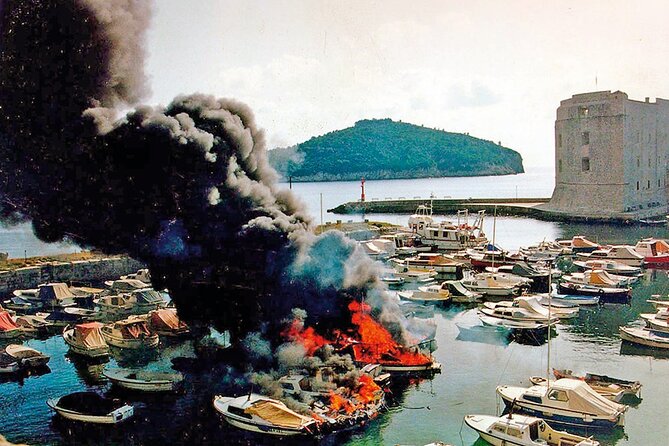
- Fortifications-focused stops like Revelin Fortress and views tied to the city walls and harbor
- Small moments between headline sights, including stairways, placetas, and fountains
- Private format for your group only, so you can ask questions without crowd pressure
Other days with a guide kept just to yourself
- Private Tour: Montenegro Day Trip from Dubrovnik★ 4.5 · 495 reviews
- Tour The Game of Thrones – Private Walking Tour★ 5.0 · 464 reviews
- Montenegro Private Full Day Tour from Dubrovnik★ 5.0 · 376 reviews
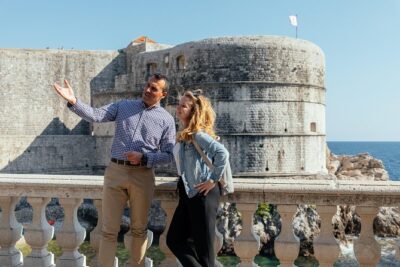
- PRIVATE TOUR: Highlights & Hidden Gems of Dubrovnik With Locals★ 5.0 · 249 reviews
A veteran-led walk that changes what you notice
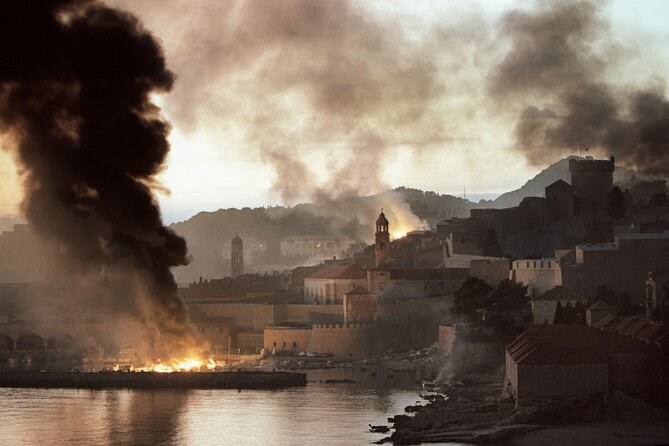
Dubrovnik looks like a postcard. Then you step into the story of the Homeland War and the stone stops being decorative. A guide with firsthand experience brings the 1991 to 1992 siege reality into focus, with the kind of detail that is hard to pick up on your own.
What I like most is the balance. You are not just hearing dates. You are moving through the same kind of spaces where civilians, defenders, and officials had to make decisions. The tour also tends to include the wider Dubrovnik story, not only 1990s conflict. That is one reason people come away feeling like they understand the city’s character, not just the war.
This is also a question-and-answer style experience. With a guide who has lived it, your curiosity matters. If you are the type who asks how, why, or what it felt like, you will probably get real answers, not generic talking points.
Route flow, meeting points, and how 2.5 hours works
Plan for about 2 hours 30 minutes of guided walking through the Old Town. It is a private tour, meaning only your group participates, which usually helps you keep a comfortable pace and avoid the worst bottlenecks.
You start near Ulica Vrata od Ploča (in Dubrovnik’s east-gate area). The walk ends around the west gate of Pile called Brsalje, near Nautika Brsalje ul. 3. In other words, you are doing a real east-to-west traverse, which is great if you want a sightseeing spine you can build on later.
One practical note: this experience is marked as requiring good weather. Old Town walking is always easier when the streets are dry, especially when you hit stairways like the Jesuit Staircase. Bring layers and shoes you trust.
Revelin Fortress: your first taste of Dubrovnik’s defense mindset
The tour starts at Revelin Fortress. Even before you reach the most famous wall sections, you are given a defense-focused introduction. You get oriented to Dubrovnik as a walled city, not just a medieval set.
Revelin is also a smart first stop because it sets expectations. You learn how the city’s layout shaped protection and movement, and you start noticing the practical details that later stops reinforce. If you like history that feels spatial, this opening works well.
Timing here is short, around 10 minutes, so it is less about deep museum-style content and more about mental setup. You will be ready for the walls and squares when you reach them.
Dubrovnik City Walls and the harbor story you can see
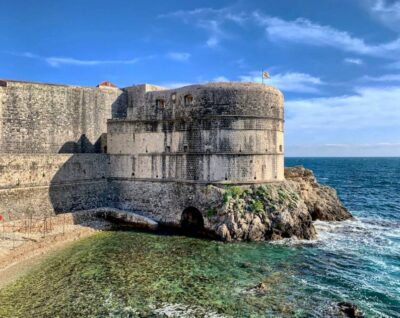
Next comes Dubrovnik City Walls, with a focus on the old city harbor and several defense points you can relate to the landscape. You also get references to the Fortress of St. John, the fortifications of St. Luke, and the Dominican Monastery area.
City walls can be impressive but abstract if you only look outward. Here, the guide helps you connect what you see, the harbor area, and how Dubrovnik’s structure mattered during the siege period. That is the core value of this tour: the guide keeps your attention on cause and effect, not just photo angles.
This portion runs about 20 minutes and is built for comprehension. Most of the stops are designed so you can look, listen, and then move on before fatigue sets in. If you have limited time in Dubrovnik, this is a good way to compress a lot of key ideas into one walk.
More days handed to a private guide
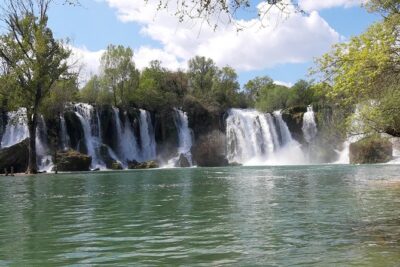
- Mostar and Kravice Waterfalls Tour from Dubrovnik (Semi-Private)
★ 5.0 · 3,125 reviews - Dubrovnik: Blue & Green Caves Private Boat Tour with Drinks
★ 4.7 · 814 reviews - Dubrovnik Private Speedboat Tour to Elaphite Islands with Drinks
★ 5.0 · 660 reviews - Private Tour: Montenegro Day Trip from Dubrovnik
★ 4.5 · 495 reviews - Tour The Game of Thrones – Private Walking Tour
★ 5.0 · 464 reviews
Luza Square and Sponza Palace: the memorial room is the heart of it

Then you hit Luza Square, which is one of the city’s central crossroads of daily life and official power. You will see landmarks like the Clock Tower, Small Onofrio’s Fountain, City Hall, and the Church of St. Blaise.
This is also where the tour shifts from general setting to the emotional center. The guide takes you into the Homeland War Memorial Room in Sponza Palace. Entrance is included, and it features videos and photos connected to Dubrovnik’s defenders.
I consider this the must-do moment of the experience. Seeing the room content after you have already walked through the city’s key squares makes the memorial feel less like a separate exhibit and more like a continuation of the streets around you. You do not just learn about the siege. You see how the city remembers the people who defended it.
This stop is scheduled for about 20 minutes, which is a good length. It gives you time to absorb without turning the tour into a long sit-down session.
Stradun and the Buza Gate area: where the city movement matters
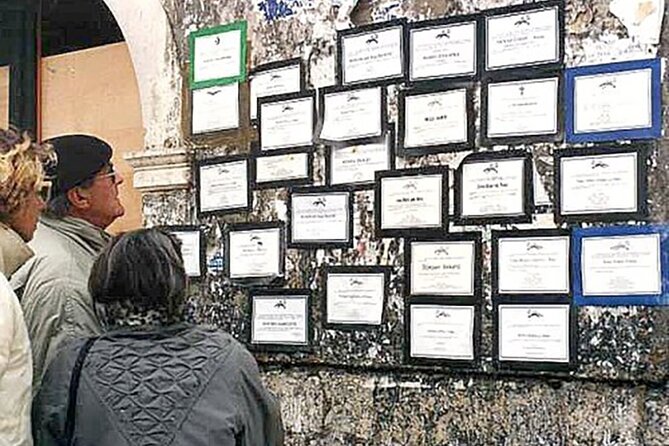
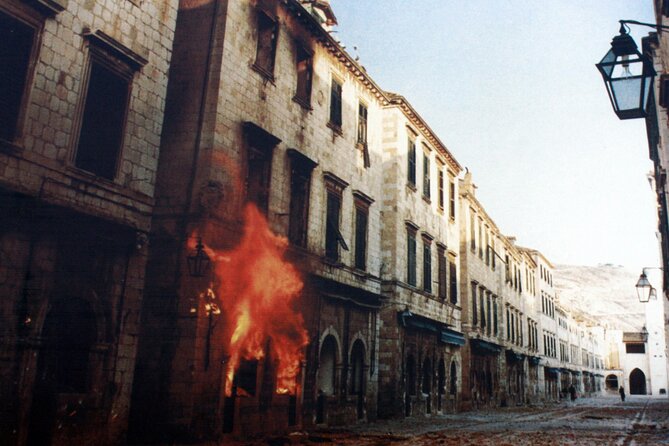
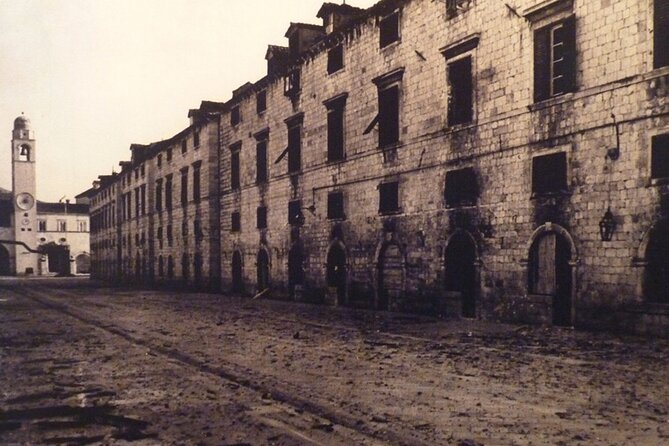
From there, you walk along Stradun, Dubrovnik’s main street, and toward the Ruđera Boškovića street near the Buža Gate area. These are the high-traffic historic corridors where it is easy to understand how quickly movement could change during a crisis.
Stradun is also one of those streets where the guide’s timing helps. If you are standing there while the city story is fresh in your mind, you start noticing how the space would function under pressure. It is not only pretty and photogenic. It is also practical in a way you might not expect.
This section is shorter, around 10 minutes, so it is more about passing through key urban arteries than lingering.
Ivan Gundulić, Rector’s Palace, and the Cathedral zone: power, identity, religion
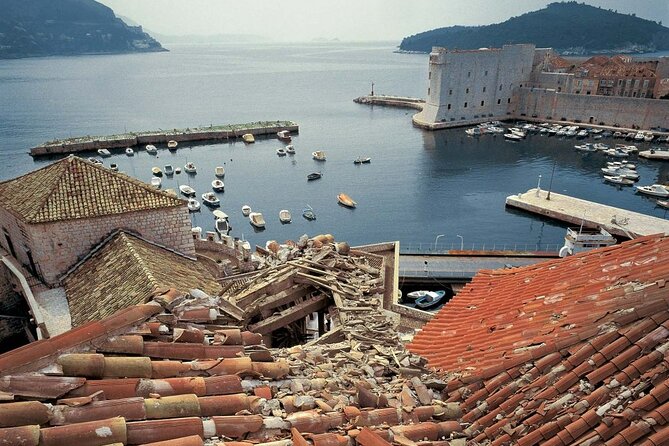
The tour keeps stepping through symbols of Dubrovnik’s civic life. You visit the Monument of Poet Ivan Gundulic, along the route near the green market and also the Pucic Palace area.
Then you head toward Rector’s Palace, described as the seat of government of the Republic of Dubrovnik. For me, this is where the tour’s storytelling widens beyond the Homeland War. You get context for what Dubrovnik historically valued: governance, structure, and public responsibility.
After that, you reach the Cathedral of the Assumption of the Virgin Mary area, with connections to the Treasury of the Republic, Bishop’s Palace, and Ponta Gate. The cathedral zone adds another layer: the city’s spiritual and institutional identity.
These stops are each timed to keep momentum. You are on foot and the Old Town is compact, so the guide does not waste time. At the same time, the stop-by-stop flow makes the city feel like one connected system rather than a checklist.
Jesuit Staircase and hidden lanes: small turns that feel dramatic
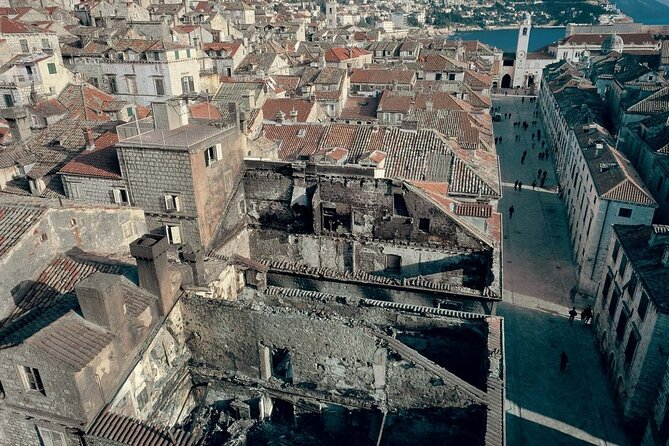
One of the best parts of Dubrovnik is how quickly the place changes when you turn a corner. This tour leans into that with the Jesuit Staircase, where you see the Church of St Ignatius of Loyola and its stairways.
You also move through surrounding streets, which can feel surprisingly tucked in once you are away from the main thoroughfares. This is where you may start noticing Dubrovnik’s scale and how people would experience the city on foot, not from a bus window.
The route also references the Great Granary and the Tower of Minčeta. Even if you only catch portions of the tower views from street level, having those reference points makes later sightseeing feel more coherent.
This stop cluster runs about 15 minutes, and it is timed well. The pace here helps you absorb the stairway and small-street mood without making you feel stuck in the hardest terrain too early.
Church of St Joseph and the Ivo Grbić House corner
Next comes Church of St Joseph, with time around the Placeta, the Wide Street, and the House of Ivo Grbić. These are not always the first things you pick if you only chase the biggest icons, but that is why they work here.
The tour uses these smaller spots to keep the story grounded. When a guide slows down near quieter landmarks, it helps you understand that Dubrovnik was lived in, not only defended and posed for visitors. These stops often give you a breath between heavier memorial and fortress themes.
You get about 15 minutes here, which feels just right for a short pause and a change of pace.
Franciscan Church and Monastery, Onofrio fountains, and finishing at Pile Gate
In the final stretch, you reach the Franciscan Church and Monastery area. You also see the Large Onofrio’s Fountain and the Church of the Holy Saviour.
Fountains in Dubrovnik are more than decoration. They are practical city infrastructure that also marks identity. When you see the Large Onofrio’s Fountain while the guide connects the surrounding streets to defense and resilience, it lands differently than it would during a casual walk.
The tour then concludes at Pile Gate, near St Lawrence and Bokar Fortresses, and around Kolorina Bay. Ending at Pile Gate is satisfying because it feels like the full walk is closing the loop, with the west side defense perspective fresh in your mind.
This finish is about 10 minutes, but it tends to leave you with a strong visual memory of the forts and bay line.
Price and value: what $120.16 per person is really buying
At $120.16 per person for about 2.5 hours, this is not the cheapest way to see Dubrovnik. But it is built for real value.
You are paying for:
- Professional tour guidance
- Entrance to the War Memorial Room (included)
- A private format where your group is the only group on the route
- A storytelling style grounded in a veteran’s firsthand perspective
If you have ever done standard tours where the guide cannot adapt because the group is too large, the private setup here matters. You can ask questions, and the guide can tailor emphasis to what you care about, whether that is the Homeland War, Dubrovnik’s civic identity, or connecting street landmarks to stories you have seen elsewhere.
Also, English is offered, and the tour uses a mobile ticket. That small detail helps you avoid last-minute friction.
What to expect from the experience, emotionally and practically
This is a serious subject. The siege period from 1991 to 1992 is treated with care, and the guide’s personal accounts can be moving in a way you cannot get from a signboard. One reason the tour earns such strong reactions is that it is not only information. It is perspective.
At the same time, it is not limited to war talk. The city sights are woven in so you finish with both memory and context. Some guides also bring in a Game of Thrones angle when you pass certain streets and fortification backdrops. If you are a fan, it can help you connect Dubrovnik’s look to the way you already imagine it.
And if you are traveling with a teen or someone who gets bored in long lectures, the format often helps. You are constantly moving and seeing, so the history stays tied to a location.
Practical tips so you feel comfortable on this Old Town route
- Wear comfortable shoes. You will be on old stone streets and near stairways.
- Plan for a full walk across the Old Town. Bring water, but know food and drinks are not included.
- Dress for the weather. This experience requires good weather, and you will be outdoors much of the time.
- If you like photo stops, give yourself a little extra time. The guide keeps the flow, but you can still grab images when there are pauses.
- Have questions ready. This tour works best when you ask, not just listen.
- Book a bit earlier than you think. On average, people book around 48 days in advance, which suggests it sells out at popular times.
Who should book this Homeland War private tour
Book it if you want Dubrovnik with meaning, not just views. You will likely appreciate it if you care about:
- the Homeland War and how Dubrovnik defended itself
- how civic buildings, churches, and walls connect to the city’s identity
- a guided route that covers major Old Town sights in one coherent storyline
It is also a good match for first-time visitors who want an efficient Old Town orientation. Starting near Ploča and ending at Pile helps you build your own walking plan afterward.
Skip it or choose a different tour if you mainly want light entertainment and minimal emotional content. This one is designed to be reflective. That is exactly why it works for many people.
So, should you book it?
If you are coming to Dubrovnik for the story behind the walls, I think this private tour is a smart use of time. The Homeland War Memorial Room stop gives the topic weight, and the veteran guidance keeps every major landmark tied to what matters.
You should feel especially good about booking if you want a private, English tour with professional guidance and a route that runs from east-gate area to Pile Gate in about 2.5 hours. Just make sure you are prepared for an experience that can be emotionally intense, even while it stays structured and practical.
FAQ
How long is the Dubrovnik Homeland War Private Tour?
The tour runs for about 2 hours 30 minutes.
What is the price per person?
The price is $120.16 per person.
Is the tour private?
Yes. It is a private tour or activity, and only your group participates.
What languages is the tour offered in?
The tour is offered in English.
What is included in the price?
Professional tour guidance is included, and entrance to the War Memorial Room is included.
What is not included?
Food and beverages are not included, and any personal purchases or expenses are not included.
Where does the tour start and end?
It starts at Ulica Vrata od Ploča (20000, Dubrovnik) and ends in the area of the west gate of Pile called Brsalje, near Nautika, Brsalje ul. 3, 20000, Dubrovnik.
Do I need to bring a paper ticket?
No. A mobile ticket is included.
What if the weather is bad?
This experience requires good weather. If it is canceled due to poor weather, you will be offered a different date or a full refund.
Can I cancel for free?
Yes. Free cancellation is available up to 24 hours in advance for a full refund.
More Tours in Dubrovnik

More Private Days in Dubrovnik


More Tour Reviews in Dubrovnik

Fresh on the Dubrovnik shortlist


Dubrovnik Private Tours, compared.
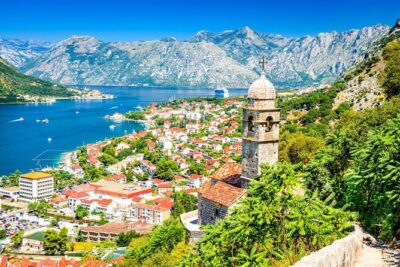 ★ 4.5Private Tour: Montenegro Day Trip from DubrovnikFrom $296495 reviews
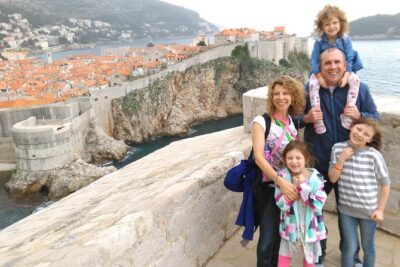 ★ 5.0Tour The Game of Thrones – Private Walking TourFrom $185464 reviews
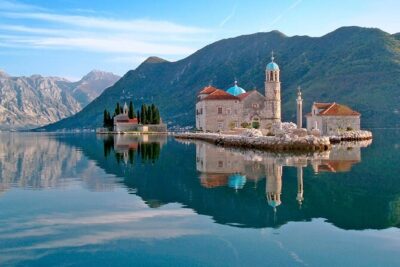 ★ 5.0Montenegro Private Full Day Tour from DubrovnikFrom $601376 reviews
 ★ 5.0PRIVATE TOUR: Highlights & Hidden Gems of Dubrovnik With LocalsFrom $104249 reviews
 ★ 5.0Old Town & City Walls Private Walking TourFrom $303206 reviews
 ★ 5.0Montenegro Private Tour from DubrovnikFrom $806193 reviews
 ★ 5.0Mostar, Pocitelj and Kravice Waterfalls Private Tour from DubrovnikFrom $653179 reviews
 ★ 5.0Private full day Montenegro tour from Dubrovnik by Doria ltd.From $338121 reviews
Browse the lists this tour appears in